
A Humanoid Robot Goes to Work in a Steel Fab Shop
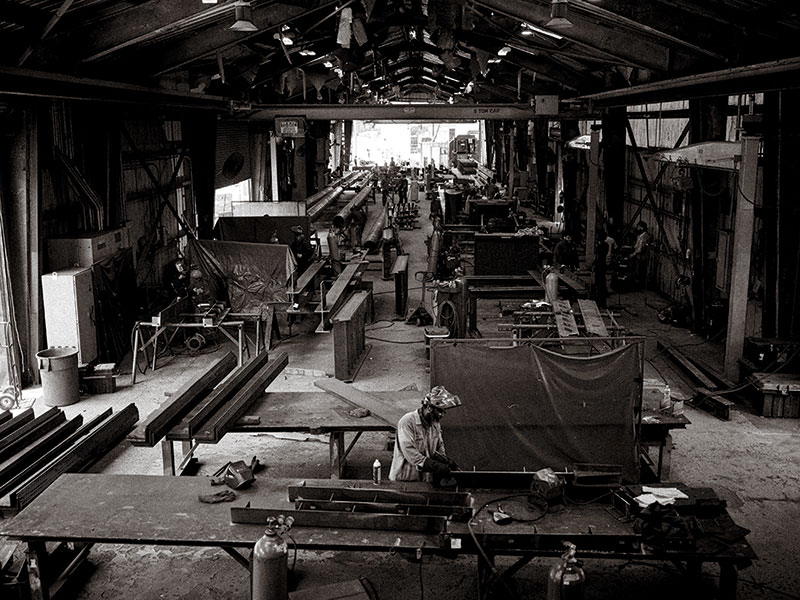
Persona AI Pilots Humanoid Training Ground in Active Steel Facility
Later this year, a humanoid robot from Persona AI will walk onto the floor at SSE Steel Fabrication in Lower St. Bernard, Louisiana, and start learning to weld. As far as we know, it is the first time a humanoid built specifically for industrial fabrication will be tested inside a live, operating facility. In a new feature in Biz New Orleans by Samantha Hindman, Persona AI’s pilot program with SSE Steel Fabrication takes shape as a strategic proving ground for physical AI, designed to bridge the gap between emerging humanoid capabilities and the real world demands of heavy manufacturing. Persona AI is led by CEO Nicolaus Radford
Justin Airhart, chief operating officer at SSE, saw a piece about a Houston company building humanoids for heavy industry and sent us a message. SSE is a family business, founded in 1996 by Marc and Cheryl Nuñez and now led by their daughter Mindy Núñez Airhart. Around 75 people, roughly 30 million dollars in revenue, a 14 acre campus, and bespoke structural steel where no two projects are the same. That last part is why it is the right place to try this. A shop where the work changes constantly is a harder problem than a production line, and a harder problem is a more useful test.
SSE and Humanoid Robots
SSE bought its first robotic beam line in 2016. When Mindy announced it, the response was concern about job losses. What followed was the opposite. The extra capacity brought in more work, the company added a second shift, then a third, and hired as it went. Since then, they have added five more pieces of automated equipment, including welding cobots, and the pattern has held every time. The wider numbers point the same way. The American Welding Society expects around 82,500 welding positions to need filling every year through 2029. The average working welder in the United States is about 55. For every five who retire, roughly two arrive. Deloitte and the Manufacturing Institute put the manufacturing shortfall at up to 3.8 million workers by 2033, with around 1.9 million of those posts potentially going unfilled. The robot is not going after work someone is doing. It is going after work nobody can be found to do.
What will Persona’s Humanoid Robot actually do?
The first assignment is deliberately narrow: fillet welding, running welds along pre fitted structural members. Repetitive, physically demanding, and among the hardest positions in the shop to keep staffed. If it goes well, the scope widens from there. The robot stands around 5 feet 8 inches, with two arms, two legs, vision, and hands that use the same tools the crew already uses. It walks stairs, moves between workstations, and works in the shop as it is, which means SSE does not have to redesign the floor around it.
Cameras have been running on the SSE floor for months, capturing how welders position themselves, how material handlers move around freshly cut beams, and the ordinary rhythm of a working shop. None of it is staged. That footage feeds our simulation environment, where behaviors get built and tested against a digital replica of SSE before anything is attempted with hardware.
Why Louisiana?
The pilot is facilitated by Louisiana Innovation, part of Louisiana economic development, which launched in 2025 with a 50 million dollar growth fund and a remit to make the state a base for technology led industry. Their communications lead, Margot McNeely, recently visited shipyards across South Louisiana and found every one of them looking at some form of automation to meet demand they cannot currently keep up with.
Read More